Exploring the Depths of Male Portrait Art: An Artistic Perspective
When you consider male portrait art, you're stepping into a complex landscape shaped by historical context and cultural narratives. Each brushstroke and medium tells a story, revealing layers of identity and masculinity that have evolved over centuries. As you explore different artistic movements, you'll notice how techniques reflect not just the artist's vision but societal expectations of manhood. Yet, despite this rich history, intriguing questions remain about the future of male portraiture and its role in contemporary discourse. What might these evolving representations reveal about our understanding of masculinity today?
Historical Context of Male Portraits

Throughout history, male portraits have captured not just individual likenesses but also the essence of societal values and power dynamics. You'll notice that these artworks often reflect the status and roles of men in different cultures. From ancient Rome to the Renaissance, portraits served as symbols of authority, showcasing the social hierarchy of the time. The way men were depicted—whether in armor or elaborate clothing—revealed their power and influence in society. In the domain of art, one can find various vintage and contemporary pieces that offer unique perspectives on male identity and societal roles, including vintage art pieces that highlight the historical context of masculinity.
As you explore various historical periods, you'll find that male portraits also convey ideals of masculinity. During the Baroque period, for instance, artists emphasized strength and virility, often portraying men in dynamic poses to suggest action and dominance. This wasn't merely about capturing a face; it was about embodying the traits society valued.
In the 19th century, as modernity took hold, portraits began to shift focus. Artists started to explore more intimate and personal aspects of male identity, reflecting changes in societal expectations. Each era's portrayal of men informs you about the prevailing attitudes and beliefs of that time, making male portraits a fascinating lens through which to view cultural history.
Key Artistic Movements
Over the centuries, various artistic movements have profoundly influenced how male portraits are created and perceived. During the Renaissance, artists like Leonardo da Vinci and Michelangelo focused on realism and human emotion, elevating male portraiture to new heights. Their attention to anatomical accuracy and expressive features set a standard that resonated through the ages. This pursuit of emotional depth parallels the vibrant expressions found in modern works like Vakala: African American Goddess, which symbolizes cultural heritage through rich, deep skin tones and fluid watercolors.
As you move into the Baroque period, you'll notice a shift toward dramatic use of light and shadow. Artists like Rembrandt captured the depth of character, emphasizing the psychological complexity of their subjects. This era encouraged a more intimate and personal approach to male portraits.
With the advent of Romanticism, you encounter a celebration of individualism and emotional depth. Artists portrayed men not just as figures but as embodiments of ideals and emotions, often set against striking landscapes.
Modern movements, such as Impressionism and Expressionism, challenged traditional forms, introducing new perspectives and techniques. They invited you to see male portraits through a lens of color, light, and emotional resonance, reshaping their narrative. Each movement reflects its time, offering unique insights into male identity and representation through art.
Techniques and Mediums Used
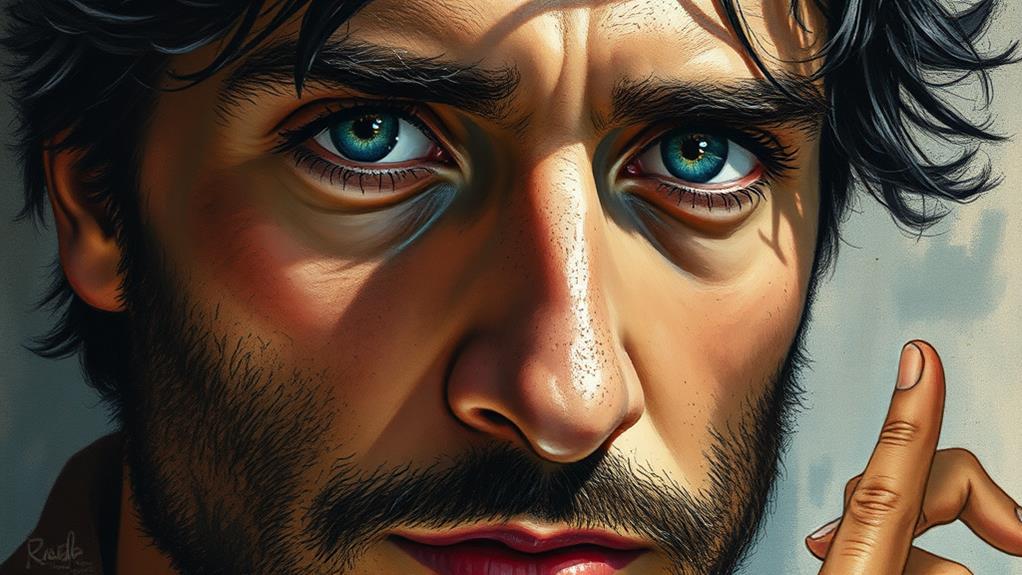
When creating male portraits, artists utilize a variety of techniques and mediums that greatly influence the final outcome. You might find them employing traditional methods like oil painting, which allows for rich textures and deep colors. This medium's slow drying time gives you the flexibility to blend and layer, enhancing the portrayal of skin tones and facial features. Additionally, artists may choose to wear apparel that advocates for causes they believe in, such as a Mental Health Matters tee, which not only promotes awareness but also adds a layer of personal expression to their work. Alternatively, you may encounter artists using charcoal or graphite for a more immediate and expressive style. These mediums lend themselves to quick sketches and detailed renderings, capturing the essence of their subjects with a raw, emotional quality. Watercolor can also be a choice, providing a softer, ethereal effect, perfect for conveying mood and atmosphere.
Digital tools have revolutionized portrait creation, offering you endless possibilities. Programs like Adobe Photoshop allow for manipulation and experimentation, merging traditional techniques with modern technology. You might also see mixed media approaches, where artists combine paints, collage elements, and found objects to create unique textures and layers.
Ultimately, the choice of technique and medium reflects the artist's vision and intention, shaping the narrative and emotional depth of the male portrait.
Notable Male Portrait Artists
Many artists have made their mark in the domain of male portraiture, each bringing unique perspectives and techniques to their work. When you investigate this enthralling world, you'll encounter some notable figures whose contributions stand out. Additionally, contemporary artists continue to explore new styles, ensuring that male portraiture remains a dynamic and evolving field, much like the high-quality artwork available for various decor styles at Riverside Artists.
- Rembrandt van Rijn – Known for his masterful use of light and shadow, Rembrandt's portraits capture the essence of his subjects with a profound emotional depth.
- Lucian Freud – A contemporary of the modern era, Freud's raw and unfiltered approach to male portraiture reveals the physicality and vulnerability of his subjects, challenging traditional aesthetics.
- Chuck Close – Famous for his large-scale, photorealistic portraits, Close's innovative techniques, including his grid method, allow you to appreciate the intricate details of his male subjects.
- Andy Warhol – Warhol's pop art style revolutionized portraiture, infusing it with vibrant colors and commercial techniques. His male portraits, including those of famous figures, reflect cultural commentary.
These artists not only shaped the genre of male portraiture but also invited viewers like you to explore the complex narratives behind each piece.
Psychological Depth in Portraits

Throughout history, artists have sought to convey the psychological depth of their subjects in portraiture, revealing layers of emotion and character that resonate with viewers. When you look closely at a male portrait, you might notice how artists use technique to express inner turmoil or tranquility. Each brushstroke can evoke a sense of vulnerability, strength, or introspection, inviting you to connect with the subject on a deeper level. Just as a well-designed garment, like the Give Thanks Ultra Cotton Long Sleeve Tee, can evoke emotions through its elegant typography, so too can the elements within a portrait.
Consider the use of color and light; these elements can dramatically influence the psychological impact of a portrait. A shadowed face might suggest mystery or sadness, while a well-lit expression can convey confidence and openness. You'll find that the gaze of the subject plays a significant role as well. A direct stare might challenge you, while averted eyes can signal contemplation or even regret.
Moreover, the choice of background and clothing can reveal socio-economic status or personal identity, adding another layer of complexity to the narrative. As you engage with these portraits, you're not just observing a face; you're experiencing a rich tapestry of emotions, inviting you to reflect on the human condition and the intricate stories behind each character.
Cultural Representations of Masculinity
Art doesn't just capture emotions; it also reflects societal values and norms, particularly regarding masculinity. Throughout history, male portrait art has depicted various representations of what it means to be a man, often influenced by cultural contexts. These portrayals can shape and reinforce societal expectations, impacting how individuals perceive themselves and others.
Consider these four key cultural representations of masculinity in male portrait art:
- Heroism: Many portraits depict men as heroic figures, embodying bravery and strength. This representation often highlights physical prowess and valor.
- Authority: Art frequently portrays men in positions of power, wearing formal attire that signifies their status. This reflects cultural norms around leadership and dominance.
- Vulnerability: Some contemporary works challenge traditional norms by showcasing men in vulnerable poses or emotional states, inviting deeper conversations about masculinity.
- Diversity: Modern portrayals increasingly celebrate diverse expressions of masculinity, capturing men from various backgrounds, orientations, and identities, challenging the one-size-fits-all narrative.
Contemporary Trends in Male Portraiture

Contemporary trends in male portraiture reflect a dynamic shift in how artists approach the representation of masculinity. You'll notice that today's artists are exploring a broader spectrum of identity, moving beyond traditional ideals. Instead of conforming to rigid standards, they embrace fluidity, vulnerability, and authenticity.
You might see portraits that capture men in intimate moments, portraying emotions often linked with femininity. This shift challenges stereotypes and invites viewers to engage with a more nuanced understanding of what it means to be male. Techniques such as mixed media or digital manipulation further emphasize individuality, allowing for a more personal expression.
Additionally, cultural diversity plays a significant role in contemporary male portraiture. Artists are increasingly representing men from various backgrounds, highlighting intersectionality and the unique experiences tied to race, sexuality, and heritage. This inclusivity enriches the dialogue around masculinity, encouraging you to question preconceived notions.
As you explore these contemporary works, consider how they reflect societal changes and the ongoing evolution of male identity. Ultimately, this new wave of portraiture invites you to appreciate the complexity of masculinity in a vibrant, relatable manner.
The Future of Male Portrait Art
Looking ahead, the future of male portrait art promises to be even more inclusive and reflective of diverse experiences. As artists continue to push boundaries, you'll likely see a broader range of representation that captures the complexity of masculinity today. Here are a few trends to keep an eye on:
- Diverse Subjects: Artists will increasingly focus on men from varying cultural, racial, and socioeconomic backgrounds, emphasizing unique narratives.
- New Mediums: Expect to see male portraits created using digital tools, augmented reality, and even interactive installations, breaking traditional boundaries.
- Emotional Depth: Future portraits will explore deeper into vulnerability and emotional expression, challenging stereotypical notions of masculinity.
- Collaborative Projects: Look out for artists partnering with communities or other creatives, leading to dynamic works that reflect collective experiences.
As these trends unfold, you'll witness a rich tapestry of male portrait art that not only celebrates individuality but also invites conversations about identity, culture, and the evolving role of masculinity in society. This evolution promises to make male portraiture more relevant and impactful than ever before.
Read The Next Blog Post –
So, next time you admire a male portrait, remember that behind those chiselled features and stoic expressions lies a world of turmoil, vulnerability, and the relentless quest for validation. Forget the days when men were just painted as heroic figures; now they're grappling with their feelings, just like the rest of us! Who knew art could be a mirror reflecting not just masculinity but the existential dread lurking beneath those perfectly groomed beards? What a relief!

Reach Out
Our Services:
Blog Post Writing
We do well-researched, timely, and engaging blog posts that resonate with your clientele, positioning you as a leader in your field of expertise.
Content Writing
Beyond articles and content for blogs, we delve into comprehensive content pieces like eBooks, and case studies, tailored to showcase your expertise. Website Content Writing: First impressions matter. Our content ensures your website reflects the professionalism, dedication, and expertise you bring to the table.
Social Media Management
In today’s interconnected world, your online presence extends to social platforms. We help you navigate this terrain, ensuring your voice is consistently represented and heard.
WordPress Website Maintenance
Your digital office should be as polished and functional as your physical one. We ensure your WordPress site remains updated, secure, and user-friendly.
For more information, ad placements in our blog networks, article writing, social media management, or listings on our Google News portal, reach out to us at theriversideartists@gmail.com.
Warm regards,
The Riverside Artists Team theriversideartists@gmail.com

Tony Ramos
Article Content Writer We write content articles for all businesses. We produce content that can include blog posts,website articles, landing pages, social media posts, and more. Reach out for more information to theriversideartists@gmail.com, "Best to You" Tony.


Similar Posts

Art Competitions and Juried Art Exhibitions

Understanding the Differences Between Traditional and Digital Arts: A Comparative Analysis